
What precautions should be taken when using a horizontal sterilizer? How should daily maintenance be performed?
This is the title h1 placeholder text
Summary: Horizontal autoclaves are widely used and reliable. The principle of a horizontal autoclave is mainly to denature biological molecules such as proteins. When high-temperature and high-pressure steam comes into full contact with the items to be sterilized, latent heat is released, thus heating the items to be sterilized. Heating accelerates the movement of protein molecules, causing them to collide with each other, which can break the secondary bonds connecting the peptide chains, causing the molecules to change from an orderly and compact structure to a disordered and loose structure. A large number of hydrophobic groups are exposed on the molecular surface, combining with each other to form larger polymers, which solidify and precipitate. The horizontal autoclave irreversibly destroys enzymes and structural proteins, thus killing microorganisms and sterilizing items.
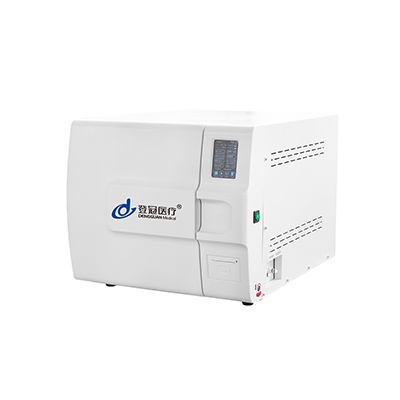
Horizontal sterilizers are widely used and reliable. The principle is mainly to denature biological molecules such as proteins. When high-temperature and high-pressure steam comes into full contact with the items to be sterilized, latent heat is released, thus heating the items to be sterilized. Heating accelerates the movement of protein molecules, causing them to collide with each other, which can break the secondary bonds connecting the peptide chains, causing the molecules to change from a regular and compact structure to a disordered and loose structure. A large number of hydrophobic groups are exposed on the molecular surface, combining with each other to form larger polymers, solidifying and precipitating. Horizontal sterilizers irreversibly destroy enzymes and structural proteins, thus killing microorganisms and sterilizing items.
The main characteristics of horizontal sterilizers are broad sterilization spectrum, strong sterilization effect, reliable effect, rapid action, and no residual toxicity. Suitable for sterilization of various heat-resistant items, including liquids.
According to the sterilization principle, horizontal sterilizers can be divided into low-exhaust sterilizers and pre-vacuum sterilizers.
Precautions for using horizontal sterilizers:
1. Do not open the sterilizer lid before the pressure reaches zero MPa.
2. If the pressure gauge is abnormal, stop using the steam sterilizer.
3. When opening the sterilizer lid, pay special attention to the steam inside the sterilization chamber to prevent burns.
4. When placing sterilized items, be careful not to touch the temperature probe in the inner tank.
5. When the water level in the exhaust bottle is higher than the high mark, pour out the water to the low mark before sterilization.
6. When the water level in the pot is lower than the horizontal bar limit mark in the center of the bottom plate, add an appropriate amount of distilled water near the horizontal bar limit mark.
7. In order to ensure that the pipeline is unobstructed and the pipeline system is not blocked, it is customary to change the water frequently; when the high-pressure steam sterilization equipment is not used for a long time, the water in the sterilizer should be drained.
Maintenance of horizontal sterilizers:
1. Wipe the sterilizer door and instrument surfaces daily, and clean the floor of the sterilization chamber at least once.
2. Clean the impurities in the outlet filter screen of the sterilizer daily to prevent impurities from entering the exhaust pipe during the operation of the sterilizer.
3. Before daily operation, check whether the door seal of the sterilizer is flat and intact, without falling off or damage.
4. Check the accuracy of the instrument pointer daily, observe whether the temperature gauge and pressure gauge pointers are at the "0" position after the sterilizer stops running; observe whether the steam, water and other medium pipelines and valves are leaking; observe whether the running indicator of the sterilizer is intact; once any of the above parts are found to have problems, do not use the sterilizer, and maintain and repair it before use.
5. Clean and wipe the sterilizer weekly, thoroughly.
6. Clean the exterior of the sterilization equipment once per quarter to prevent dust accumulation and shorten the service life of the air filter. Avoid contact of components with water. Once the damp water dries, the power can be turned on.
7. Check once per quarter whether the connected sockets and connectors are loose, and tighten the loose ones.
8. Clean the surface of the safety valve every 6 months.
9. Check and clean the steam pipeline filter once a week and record the results.
10. The sterilizer shall be inspected annually, and the safety valve, pressure gauge, and thermometer shall be calibrated at least once a year, and the inspection results shall be recorded and preserved. The air filter should be replaced regularly.
Related News


Service Hotline
Tel:+86-519-82421222
Email:sales02@jsdengguan.com
Address:No. 17, Danfeng West Road, Jintan District, Changzhou City, Jiangsu Province
Add WeChat
Powered by: www.300.cn | Tags